The News Analyser
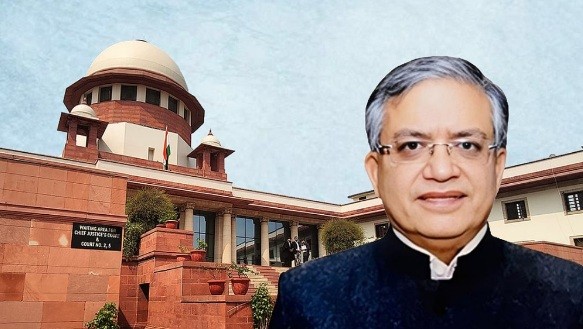
New Delhi: The Supreme Court on Monday sought responses from the Centre, the Election Commission of India (ECI) and senior poll officials on a petition alleging that Chief Election Commissioner Gyanesh Kumar took key decisions unilaterally without the approval of the other two Election Commissioners.
A three-judge Bench headed by Chief Justice of India Surya Kant and comprising Justices Joymalya Bagchi and V. Mohana issued notice to the ECI, Kumar, Election Commissioners Sukhbir Singh Sandhu and Vivek Joshi, ECI Director General (IT) Seema Khanna and Senior Deputy Election Commissioner Maneesh Garg.
“We have to issue notice. After notice, if the reports show that an Election Commission decision was neither by majority nor by unanimity, they will have to explain those decisions,” the CJI observed.
The petition, filed by Rakesh Kumar Singh, alleges that the collective decision-making powers vested in the Election Commission under Article 324 of the Constitution were being exercised by the CEC without the participation of the other Election Commissioners.
The ECI comprises the CEC and two Election Commissioners. While decisions are expected to be taken unanimously, the law provides for a majority decision when unanimity is not possible.
The petition alleges “progressive centralisation” of power within the Commission, delays in circulation of agendas and minutes, changes in electoral-roll procedures and the filing of appeals without the knowledge or approval of the other two Election Commissioners. It also refers to 14 objections allegedly recorded by the two Election Commissioners between October 28, 2025 and August 14, 2026 over decisions taken in the name of the ECI without their approval.
The petitioner has sought a declaration that any exercise of the Commission’s collective powers by the CEC without following the procedure prescribed under the 2023 law be declared invalid. The plea has also challenged the Special Intensive Revision (SIR) of electoral rolls and sought that all decisions, directions and consequential actions taken pursuant to it be declared void.
Senior Advocate Vikas Singh, appearing for the petitioner, also raised concerns over Section 16 of the Chief Election Commissioner and Other Election Commissioners Act, 2023, which provides protection to the CEC even after demitting office. Singh said such protection was unusual for a constitutional functionary. Justice Bagchi observed that even judges did not enjoy such protection. Singh clarified that he was not challenging the provision at this stage.
The petitioner also sought an interim order suspending the CEC or divesting him of his authority and allowing the other two Election Commissioners to discharge his functions. It further sought restoration of the position prevailing after the Anoop Baranwal judgment, including the Chief Justice of India in the selection committee for appointing Election Commissioners.
The Bench, however, declined to pass any immediate interim order.
“We have to have some authentic information before us. Let us wait for 10 days,” CJI Surya Kant said.
The Court also indicated that any decisions found to have been taken contrary to the prescribed procedure could subsequently be annulled. Referring to the 1993 amendment and the 2023 Act, the Bench said the procedure for conducting business was to be decided unanimously, while functioning could proceed on the basis of a majority where unanimity was absent.
The petitioner also referred to reports published by The Indian Express regarding differences within the Commission. The CJI cautioned that newspaper reports could be completely accurate, partly accurate or partly inaccurate and said the Court could not pass orders solely on their basis.
“However, we would definitely like to have a response,” the CJI said.
The matter is expected to be taken up further after the ECI and the concerned authorities file their responses and place the relevant documents before the Court.
Share News