The News Analyser
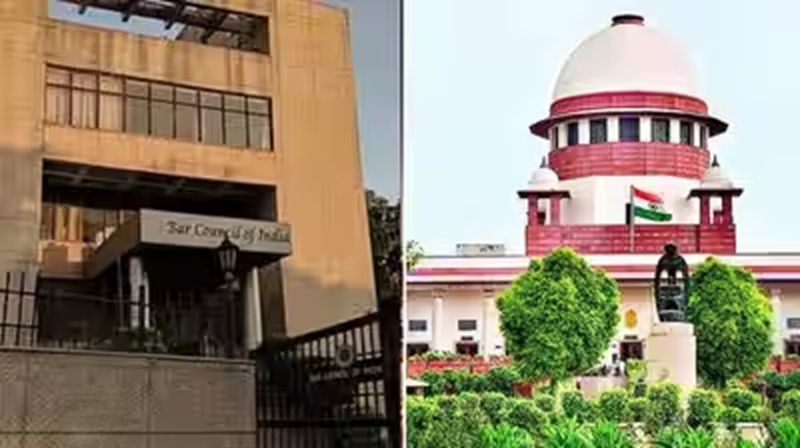
New Delhi: The Supreme Court has ruled that the Bar Council of India (BCI) has no authority to initiate disciplinary proceedings against law students, holding that responsibility for students’ conduct rests with the concerned university or educational institution.
The judgment came in connection with a controversy involving students of the 2026 graduating batch of Hyderabad-based National Academy of Legal Studies and Research (NALSAR). Around 450 students had protested against the appointment of Chief Justice of India Surya Kant as the chief guest for the university’s convocation.
A Bench comprising CJI Surya Kant, Justice Joymalya Bagchi and Justice V. Mohana held that the Advocates Act, 1961, grants neither the BCI nor State Bar Councils any express or implied power to take disciplinary action against law students.
The court declared illegal an August 13 order issued by BCI chairman Manan Kumar Mishra directing suspension of the students’ enrolment as advocates and ordering an inquiry into their conduct.
The proceedings were initiated after students opposed the decision to invite CJI Surya Kant as the chief guest at the NALSAR convocation. Two former NALSAR students, Mihira Sood and Abhishek Tiwari, approached the Supreme Court, challenging the BCI’s jurisdiction to act against the students.
Students have right to protest
The Supreme Court had earlier strongly questioned the BCI’s intervention in the NALSAR controversy. CJI Surya Kant observed that even if the students’ decision was wrong or they had been given misguided advice, they still had the right to express their views and protest.
Questioning the BCI’s decision to stall the enrolment of NALSAR’s 2026 law graduates as advocates, the CJI said, “This is an issue between me and the students. There was no need to make an issue out of it. What authority does the Bar Council have to interfere?”
The Supreme Court also issued notice to the BCI and directed that no punitive action be taken against any student or faculty member of the university.
NALSAR, one of India’s prominent national law universities, has around 1,400 students. Nearly 450 students had written to the university administration seeking withdrawal of the invitation extended to CJI Surya Kant.
The protest was reportedly linked to remarks made by the CJI during the hearing of a petition concerning police action during the NEET protests in Delhi, which had triggered resentment among sections of the student community.
The ruling reinforces the principle that disciplinary control over students lies primarily with their educational institutions and that professional regulatory bodies cannot assume powers not conferred upon them by law.
Share News